The guest network password sharing solution of the future.
About Wi-Pi
Why we Need Wi-Pi
Businesses often struggle to provide guests with secure and convenient Wi-Fi access without exposing passwords or relying on insecure open networks.
What is Wi-Pi
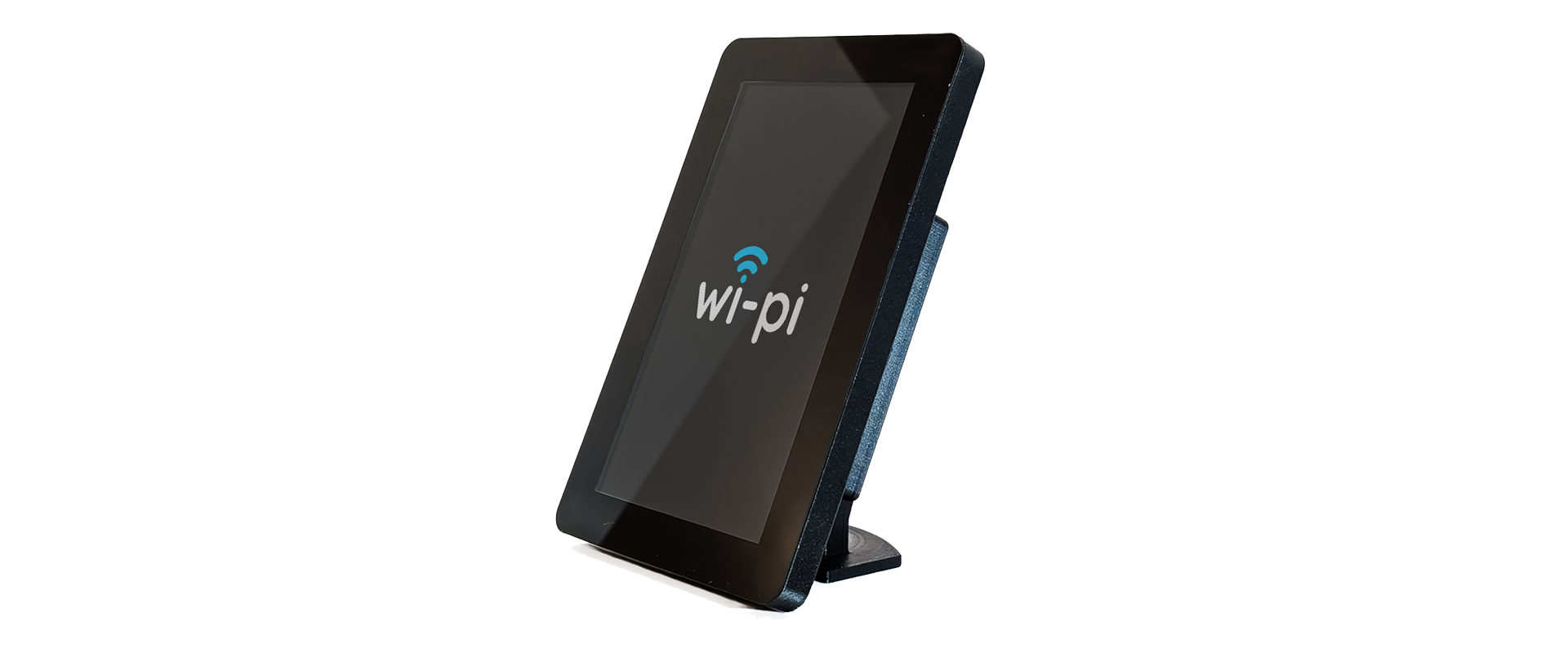
Wi-Pi is a small, handheld Raspberry Pi-powered touchscreen device that allows businesses to securely share guest Wi-Fi access using QR codes or NFC tap technology.
The Problems
With the current Public Wi-Fi sharing solutions, you open up gaps in your network that allow bad actors to more easily prey on your customers.
Insecure
Public Wi-Fi networks come in two flavours, weak password known by anyone who uses the network or no password at all.
Unencrypted
Public Wi-Fi Networks are often Unencrypted. This means all the data you send over the network is visible to anyone with the right tools to read.
Unsafe
Public Wi-Fi Networks are ripe for abuse by hackers to steal your passwords and other important data you may access while using them.
The Solution
The Wi-Pi device enables you to securely share Wi-Fi passwords using either QR Codes on its built-in touchscreen or by writing to NFC tags using the NFC card built into the device.
Longer Passwords
Using Wi-Pi to share your password enables you to have longer passwords more secure passwords without having to worry about your users having to type them out.
Encryption Enabled
By using Wi-Pi to share your Wi-Fi password you can set up proper encryption on your router to ensure your customers data is safe and secure while using your network.
More Difficult to Hack
By using Wi-Pi you make it more difficult to produce a Man in the Middle attack and even if they do manage to form this connection you can be safe in knowing your customers data is fully encrypted locking hackers out.
How is Wi-pi better
Wi-Pi is an improvement over the current implementation of QR codes for sharing Wi-Fi, as Wi-Pi’s QR code cannot be easily replaced or spoofed. Since Wi-Pi is secured by a login screen and only generates its QR code upon connection to your Wi-Fi network, a bad actor would need to have physical access to the Wi-Pi device to be able to log in and change your Wi-Fi settings on the device.
Our Team
Meet the team of SAIT students behind Wi-Pi, the next-generation guest network password sharing solution.
Matthew Hill
Hi, I’m Matthew H, a SAIT student enrolled in the School of Advanced Digital Technology in the Information Technology Services Course. As a Web Developer in my job outside of school, I leveraged my knowledge, experience, and detail-oriented approach to website construction, enabling the rest of the team to focus on their tasks without worrying about website design or build, thereby streamlining the website development process.
Coming into the Information Technology Services course, I was a bit of a blank slate, but as I got deeper into the course, I learned I enjoy a lot of the Networking and server management sides of the course. When not working on school projects, I spend a lot of time reading books, playing video games with my friends, and occasionally driving out to the mountains to take photographs.
Matthew Smithson
Hi, I’m Matthew S. I’m the creative mind behind Wi‑Pi’s branding and UX/UI design, as well as the team member responsible for 3D printing the custom case we designed. I’m currently finishing up the Information Technology Computer Systems program at SAIT, where I’ve brought my love for design, tech, and hands-on building together.
I’m a detail-oriented person who enjoys helping others, whether that’s designing and making things for friends and family or troubleshooting everyday tech problems when someone needs a hand. When I have time to myself, I’m usually into photography, gaming, working out, or binge-watching a good show or movie.
Jack Anctil
Hi, I’m Jack Anctil, Student of SAIT enrolled in the Information Technology Services course. Being able to work on a project that involves a variety of skill sets inspires me to expand my knowledge in the IT industry and improve on what captivates my interests. As my academic interest lies in the IT computer networking side of things, being the 3D modeler for this project introduces an interesting challenge outside my comfort zone while also capitalizing on the new experience gained from it.
Jasleen Kaur
Hi everyone, my name is Jasleen Kaur, and I’m currently a student at the Southern Alberta Institute of Technology (SAIT), pursuing my course in Software Development. For our capstone project, I took on the role of lead developer and systems integrator for our project Wi-Pi – a Raspberry Pi-based device that allows users to securely share Wi-Fi credentials using QR codes and NFC technology. Fun fact, this is my first such kind of project where I get to integrate both code and hardware.